
HIGH NOTES IN FORBES: Why the voice you can't see is the one people trust
Updated: Aug 10
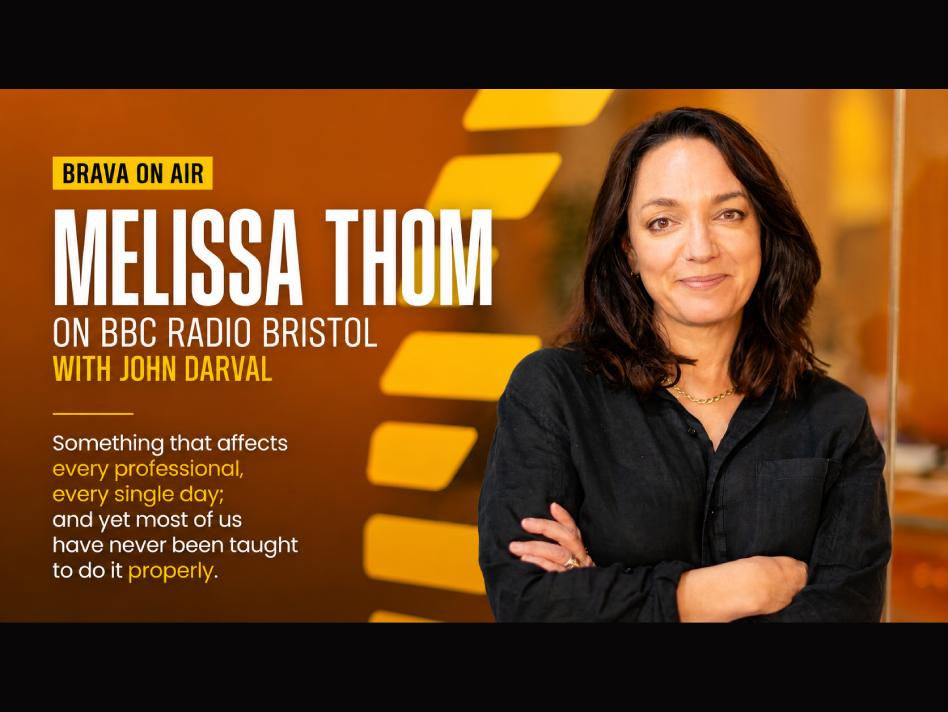
By Melissa Thom, Founder & CEO, BRAVA

We have some exciting news to share. BRAVA's HIGH NOTES podcast on the art and business of voice has featured once again in Forbes, as part of an important conversation on why audio and the human voice matters more than ever.
Written by Forbes contributor Frank Racioppi, the piece pushes back against the relentless message that video is everything and audio is yesterday's medium. It's something we've been discussing behind the scenes for a while, because at BRAVA, we've built an entire organisation around this key message: the voice is the most powerful communication tool we have.
The numbers that should make every communicator sit up
Racioppi draws on new research from Tom Webster at Sounds Profitable, whose Audio Primes 2026 report identifies a fascinating segment of the podcast audience. These are the 22% of podcast consumers who choose to listen to at least 75% of their content as audio., not because they lack access to video but because they prefer it.
Who are they? Younger, more educated, higher-earning and fiercely loyal. 89% percent listened this week. 71% percent will recommend a show. 48% percent would leave a podcast entirely over AI voices. They are, in Webster's words, "the word-of-mouth engine driving podcast discovery." And critically: 84% prefer a regular series. They reward consistency and return to the voices they trust.
Sound familiar? It should, because this is exactly what great communication has always been about., whether in a recording booth, a boardroom, or a podcast studio.
Attention versus connection: the distinction that changes everything
The line from the Forbes piece that I keep returning to is this, from Tom Webster:
"We often hear that 'video gets more engagement.' But engagement can mean either attention (e.g. watch time) or connection. Attention fades when the screen turns off. Connection does not."
We have become so fixated on metrics: views, watch time and click-through rates, that we've confused attention with connection. They are not the same thing: attention is borrowed but connection is built. And nothing builds connection like voice.
The Forbes piece references a 2020 study by University College London that makes this viscerally clear. Participants were asked to rate audio versus video for engagement. Almost all said video. But researchers weren't measuring opinions, they were measuring physiology. They were looking at heart rate, skin conductance and the body's actual response. And the body responded more intensely to audio.We say one thing but our bodies know another.
This is something we explore deeply at BRAVA. The voice is not separate from the body, it is the body. Breath, resonance, physical presence: these are not performance techniques, they are the biological architecture of human connection. When we train voice at BRAVA, we're not just shaping sound; we're working with the whole instrument.
Why the brain is wired for voice
The article explores the neuroscience behind it all, validating something we all know if we've ever been moved by a piece of audio: a radio broadcast, a performance or a bedtime story. Every time a listener presses play on a familiar voice, three things happen:
The article explores the neuroscience behind why, and it validates something anyone who has ever been moved by a radio broadcast, a performance or a bedtime story already knows. Every time a listener presses play on a familiar voice, three things happen:
Oxytocin releases. The same bonding chemical triggered during parent-child contact. Every episode of a familiar podcast reinforces it.
Mirror neurons fire. When a host laughs, the listener's brain fires as if they are laughing. Voice alone is enough for empathic resonance.
Familiarity compounds into trust. Regular episodes are microdoses of connection that accumulate over time into something profound.
This is the science behind why the most trusted communicators in the world invest so deeply in their voices.
HIGH NOTES and the wider conversation
The Forbes piece also highlights two other podcasts doing brilliant work in this space. The Sound Session, hosted by audio producer and composer Gareth Davies, explores the creative and critical role sound plays in our lives, asking questions like: "What happens when sound is the story? When does the silence hit harder than a visual jump cut?" It's a beautiful, thoughtful show and well worth your ears.
And Sounds Profitable, Tom Webster's home base, continues to produce the most rigorous, important research in audio. His Audio Primes report is required reading if you care about podcasting, communication, or understanding how people connect with content.
HIGH NOTES sits proudly in this company. Our show covers everything from Mongolian throat singing to vocal health, accents, gaming voiceover, and the business of building a career in audio. Every episode is a celebration of what voice can do when it's developed, deployed, and respected.
What this means for you
Whether you're a voice actor, a business leader, a coach, or someone who simply wants to communicate with more confidence and impact, this research is the validation. The world is not moving away from voice. It's moving towards it. The people who understand how to connect, persuade, and be remembered using their voice, will have an extraordinary advantage in the years ahead.
At BRAVA, this is what we do. Through our voice and communication training, from the VO Foundation Course to BRAVA Business coaching, we help people find, develop, and own their voice: one that builds the kind of connection that doesn't fade when the screen turns off.
Ready to develop the voice that connects?
🎧 Listen to HIGH NOTES wherever you get your podcasts
✨ Explore BRAVA's voice and communication training at brava.uk.com
📩 Want more on the art and business of voice? Join the BRAVA mailing list at brava.uk.com
Melissa Thom is a voice actor, speech and communication coach, and Founder & CEO of BRAVA. She has voiced campaigns for Google, Amazon, Nike and LL COOL J, and has trained hundreds of people across the UK and beyond.


Comments